Category Archives: Protagonist Post

pulling up roots; planting new seeds

IMG_7157IMG_7230

photographs by Grace Lichtner

At the beginning of this month I was contemplating what it felt like to be “at home” in a new place. I questioned and discussed this with many people. The response that made the most sense to me was “to be at home is to be connected”. After this month of exploring new territory, I tend to agree with this statement. Whether it’s feeling connected to the land, the water, the culture, or the people who I am surrounded by, feeling at home really does come down to the connections that I make in my immediate environment.

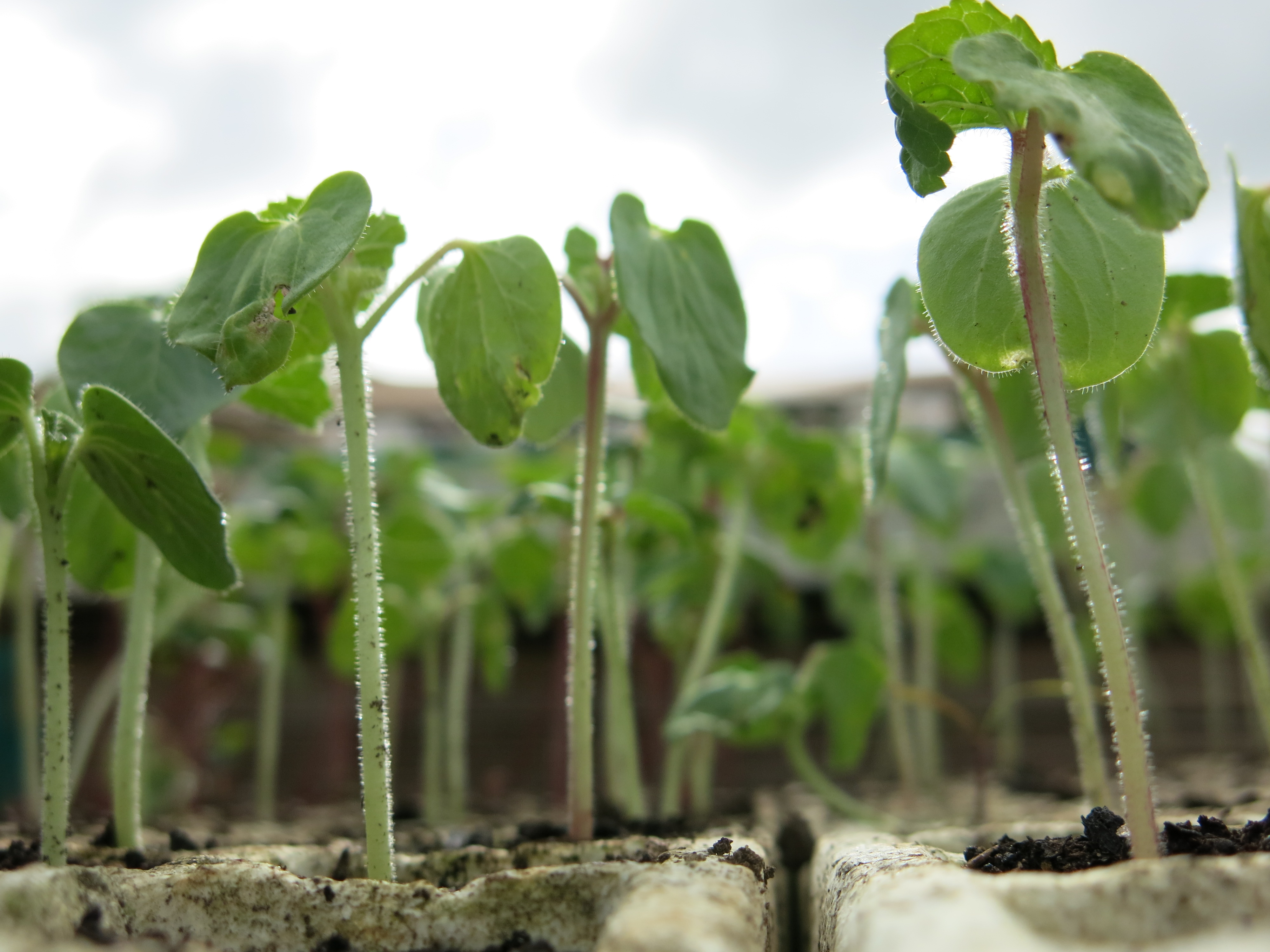
In these past four weeks, I, along with my housemates here, have gone through a lot of changes leaving old patterns behind and creating new ones. (in eating, sleeping, and communicating). I am becoming aware of my own reactions while also watching and observing my good friend Jim gradually build the foundation for his new physical home. Pulling up roots from one place can feel like a shock to the system, but I am learning that if I am able to branch out in new ways I will quickly regain nutrients and energy from the fertile soil around me. Studying my natural environment here on the island has helped me feel more connected. This time has offered me valuable lessons including, taking the time to nurture new seeds and making sure not to rush the growing process.

Like coral branching out we all are testing our flexibility stretching our limits and reaching for new connections. As a part of my “field guide” creation this month, I was asked to connect with and collect knowledge from locals on the island through interviews. I have been lucky enough to find the most helpful and kind individuals who have gone out of their way to help me feel at home and feel informed about the foreign terrain and culture. I am grateful for their initial guidance in my first wanderings here. My interviews with them have been informal yet informative. Through our conversations, I am learning by absorbing what it is they love and want to share from their island living perspective, leaving the role of the interviewer behind and taking on the role of the listener, observer and new friend.

My first real connection was Trisa. New friend and “on island” confidant Trisa immediately connected me to good people, good eats and great ways to access the water through a paddle board lesson and snorkel excursion.  She also connected me to near by neighbors of mine Theresa and Aaron who are also working on a house remodel project. Theresa writes her own blog offering all kinds of tips for a field guide to island living.

Ty and Adrian of Bush Tribe Eco Adventures are two other fantastic connections. Through Bush Tribe, I made my first explorations hiking and exploring. Ty also manages an amazing place called Discovery Grove where I learned much about the history, plants, and native fruits and herbs on island. Through Ty I was also able to make connections with friendly visitors to the island who then introduced me to Captain Dee. Dee takes visitors sailing and snorkeling.  Our excursion brought us to a near by tiny island for some of the best snorkeling I had ever experienced. Ty also introduced me to Dale who runs the fantastic local Sejah farm.

I really have had such little time here, not enough to fully engage in the history or culture of the island yet, but I am seeing each new connection as a seed that has potential to branch out into a whole new garden of possibilities. My “field guide” for St. Croix has barely begun at the end of this month but I am looking forward to taking my time cultivating the exploration and watching it grow.

1/30/14

Just finding this blog today? Read the prologue for more details on what Living Chapters is all about. Check out the Chapter Summaries Page to get caught up to date.


mapping imaginary places

 IMG_3546IMG_7075

I’ve spent many years mapping out my life, without the help of a compass or traditional navigational tools.  Through pictures, drawings and doodles on Pennsylvania diner napkins and dinner place mats I plotted out my future days.  Making lists of places I hoped to go and things I wanted to do, I ordered my scribbles in categories and columns, circling some areas and boxing in others. Then I would connect them with lines, arrows and sometimes numbers – ranking their priority.  On paper these maps would appear to be intangible destinations or imaginary places. In reality my “maps” sometimes led me to specific places  while helping me come closer to the goals I had written down. I believe that seeing my hopes and ideas visually on paper is the first step to making the impossible possible.

Creating these maps is not really about figuring out how to get somewhere or do something. It’s simply how I set my intentions, which for me is the best way to guide me to or through  any new experience. Returning to the drawings or lists solidifies my goals and reminds me of why I embarked on the adventure in the first place.

Rebecca Solnit creates maps in her “Field Guide to Getting Lost” in the form of  written chapters. Here in St. Croix, I am living out my chapters in a more experiential way. I am creating visual maps through photographs and written notes focusing on the intentions I set at the beginning of the year.  Like the scavenger hunt I created for the October chapter writer, I am using hand written notes and a series of photographs to uncover the different treasures of the island.  These photographs and written notes are my personal maps leading my exploration here.  Below are my intentions set for each map created.

  1. To feel at home with the unknown,
  2. To learn and absorb new knowledge in new places
  3. To explore uncharted territory

Map one: Feeling at home in the unknown – This month’s Wild Card Dave Schott asked me to take one photograph everyday that made me feel at home in my new surroundings.  Below are some examples:

Map two: Learning and absorbing new knowledge – By taking notes, making lists, and making marks, I am starting to absorb new knowledge and ideas about the new environment around me.

Map three: Charting new territory: Often I feel as though I am in an imaginary place here. I have to stop, think twice and look again to understand what I am looking at.  The images below map out the places I find myself in that feel more like waking dreams than living out chapters.

1/25/14

Just finding this blog today? Read the prologue for more details on what Living Chapters is all about. Check out the Chapter Summaries Page to get caught up to date.

field guide to being lost

IMG_6952IMG_6961

What does it mean to get lost, be lost, or feel lost? And why do we hold such  negative connotations with these ideas?  Rebecca Solnit explores these questions in her “Field Guide to Getting Lost” and I have pondered the concepts more and more each day here on the island.

In this 7th month of Living Chapters I am just now starting to do what I intended this project to do and I am beginning to feel like I’m actually letting go of the reigns and giving over control. It’s as if my environment itself has taken on the role of the chapter writer and is leading the process.

This month I have been asked to create my own field guide to the island of St. Croix. Chapter writer Ashley Duffalo and Wild Card Dave Schott both generously provided me with tools on how to create such a guide. They suggested I take walks, collect objects, record interviews, and make photographs. I am grateful for these guidelines. Following them has made me feel more grounded and has brought a bit of structure to my days.

Instead of an island field guide though, I feel as if I have begun to create my own personal guide for “being lost”.  Adapting to a this new environment, has been an exercise in allowing myself to be ok with the feeling of not knowing where I am exactly or where I am going.

When dropped in a new environment either for a short time or an extended stay, I always gravitate toward finding the things that are familiar or that I feel comfortable with: a routine or structure.  Upon arriving in a new place, starting a new job or meeting a new friend, I immediately want to uncover the unknown. I map out my surroundings, problem solve, or seek out answers to my list of questions.  Although these are great survival instincts when encountering new situations, I do believe that rushing to solve all the mysteries and wanting to know all the answers right away is not the best system for me. I must allow some time for learning in the uncovering.

We all desire to work from the knowledge we possess or the set of personal reference points we’ve identified but I am finding that it is counteractive to rely on that knowledge. Why try to prove what it is that we know when there is opportunity to learn something that we don’t know?

If I truly desire to learn something new and navigate new territory, I must become at ease with the unknown.  Navigating only with knowledge and reference points from maps I’ve drawn before will not help me reach new territory.

In Solnit’s “Field Guide” she comments on how getting truly lost has less to do with geography and more to do with questioning identity.  Depending on how you look at it being lost can be a bewildering or a wonderful opportunity.  It’s a time for one to “shake off the shackles that remind you of who you are, who others think you are” and allows you the opportunity to become who you want to become.

I’m taking my time, learning how to become lost here first before discovering every inch of the island. Letting go, I am not worried about knowing everything about where I am right now and trying to take the opportunity to work on learning about who I am right now.

I am still following my Living chapters guidelines though, tracking what I see, mapping where I walk, and soaking in my surroundings but enjoying it even more knowing that there is no wrong way of wandering when your quest is to become lost.

1/21/14

Just finding this blog today? Read the prologue for more details on what Living Chapters is all about. Check out the Chapter Summaries Page to get caught up to date.

Grace Lichtner has been a great partner for experiments and expeditions into being lost. Below are photographs of plants, objects, and creatures that we found in the lost parts of the house, our backyard and the North Shore that have explored thus far.

All photographs taken by Grace Lichtner and Beth Barbush.

on “Her” island by the sea

Her islandIMG_6449

At the start of this new year I was ready to dive head first into island exploration, with my blank field note-book in hand, I was prepared to record – stories to hear, places to visit, food to eat, and people to meet. St. Croix is only 28 miles long by 7 miles wide. Being a relatively small island, I was sure I would have no problem creating my own field guide in four weeks time. Well its now 12 days into January and I am quickly realizing that even with an appetite for exploration, I did not calculate “Island time” into my preplanned schedule. It took us the first week of this month to even arrive on site, I should have known that it might take a little longer to settle in and branch out into exploration mode.

Unlike prior vacation visits, this time we are setting up a new home at the end of a very long and bumpy dirt road in the tropics. There are many other things that needed to be attended to first before new exploration. Basic survival was number one on the list – figuring out how to eat, where to sleep, how to get around, and how to live among a new community. Simple adjustments need to be made to understand the different, geography, climate, communication patterns, access to technology and transportation. Making all these changes in a short period of time can feel like strenuous exploration in itself. At times this past week, this initial adventuring has left me feeling a bit overwhelmed.

But in those stressful moments its best to banish panic and doubt and simply remind myself that this is the year of letting go of past patterns and taking on new challenges. I wanted to push my comfort zone this year and this move is certainly doing it. In transition times like these there is nothing more important than keeping a healthy, positive, and peaceful mindset. The best way that I can accomplish this is by starting exploration in my immediate environment from where I am and slowly radiating outward.

The house we are living in is a beautiful construction site being put together piece by piece, day by day. It is nestled on the side of steep hill on the north side of the island close to the rainforest. The view is spectacular overlooking St. Thomas and St John Islands in the distance. The house is like an island in itself separated from the rest of the island. Even with a four-wheel drive vehicle it is difficult to navigate to and from the house to other places on the island.

With this in mind I decided to start exploring my own personal island in this new environment. The first exploration was the house itself – where will we eat? Where will we sleep? And when the construction inside home is too much where will we find refuge? Ashley’s simple suggestion of taking walks this month to get acquainted with the environment was the perfect excuse to get to know my own backyard.

My first walk upon arriving was into the overgrown garden in the backyard. I started photographing the plants, trees and flowers that I saw with every step there was something new to see and learn about. On my second outing, Grace Lichtner my new housemate and former Living Chapter’s player, accompanied me retracing the same garden path. Grace is almost 10, game for exploration and full of knowledge on plant and animal life, a perfect partner in creating a field guide. She helped me learn the names of the flowers and trees that I had photographed the day before. We made up new names for the ones she didn’t know and took notes on what we thought the plants might be good for. This time we walked further down the path than I had gone before but returned when the sun started to set and our stomachs started to growl for dinner.

Grace and both her parents, Mike and Agnes accompanied me on the third walk on the garden path. Together we went just a little bit further and discovered a star fruit tree at the end of the path as well as an opening to the road leading to the ocean below. 15 minutes later winding down a zig-zagging nearly vertical road we reached the beach for our first visit with the sun, sand and surf. We marked the adventure by collecting coral and rocks from the beach to take home to the house island.  This felt like the first accomplishment in true exploration, a bridge to the outer circle of the island and the first path of many to chart for the field guide.

1/12/14

 Just finding this blog today? Read the prologue for more details on what Living Chapters is all about. Check out the Chapter Summaries Page to get caught up to date.

escape to the tropics

IMG_3384IMG_6142

We left Western Maryland with a one-way ticket in hand to the tropics. What could go wrong? Well… a lot if you say something like “what could go wrong?” I’ve learned to never utter words like that when leaving on a trip to go anywhere. However I found myself breaking this unspoken rule and subsequently a pawn in the musical airplane game that the east coast plays when caught amidst a winter storm.

It took us four days in total to finally reach St. Croix (a trip that normally doesn’t take more than 10 hours by plane). I did say I wanted an adventure, I just didn’t realize it would start before reaching the island.

I actually don’t mind traveling and airports in general. I find them to be fascinating places (outside of the poor color scheme choices and bad decor). They act as crossroads for many of us – a place where a metaphorical life path decision becomes a physical reality. Or in my case maybe the physical diverted path became the metaphor that in a sense gave us a preview of what the lifestyle might be like moving to an island. This difficult travel itinerary was just breaking us in? Acclimatizing us for how life could be? Testing our flexibility?

We had plenty of time to ruminate on what this four day long process could mean for us. Thinking about the delay in this way made the time much easier to pass and less stressful. We had reflective conversations with each other and met a handful of kind, helpful and unique individuals, including a cosmic Bangladeshi cab driver, a wizard of all traveling tips and stories, and a financial analyst named “Blessing”.  In each airport, hotel, and form of transportation we gained valuable perspectives all making up for the inconvenient snow, ice, delays, lost baggage, angry passengers and the general chaos that entails when thousands of people congregate all vying to reach different destinations.

In this time, I also began reading Ashley’s suggested text for the month Rebecca Solnit’s “A Field Guide to Getting Lost”. It seemed appropriate, as our travel itinerary map had been abandoned by day one.  Solnit says there’s an “art of being at home in the unknown so that being in it’s midst isn’t a cause of panic or suffering” So I guess it takes a certain amount of practice to feel at home while being lost. I have been crafting this skill, my entire life and needed to be reminded of this sentiment at this precise moment.

It was perfect timing to remind myself that reaching the destination, as always, was not the important thing. The destination you are traveling to will not bring the sense of peace or the feeling of home that I seek. The only thing that could conjure that feeling would be my own reaction to my environment, (the people and actions around me) and my response to the unknown itself.

I have to agree with Solnit when she says that getting lost “seems like the beginning of finding your own way or finding another way” It’s a clean slate of how to make decisions coming from a new place in a whole new way. I am very happy that we have finally reached St. Croix, but am also aware that arriving is not the goal in the field guide to getting lost, its the wandering, connections made and lessons learned from accepting that sometimes we just don’t know where we are or exactly or where we are going.

1/7/14

 Just finding this blog today? Read the prologue for more details on what Living Chapters is all about. Check out the Chapter Summaries Page to get caught up to date.

this must be the place

“Home is where I want to be – but I guess I’m already there”                                                     – Taking Heads “This Must be the Place (Naïve Melody)”

Today I board a plane leaving home in 5 degree weather.  Tomorrow I will land in 85 degree weather.  A shift of environments and a shift in homes. This constant moving of my home in the past few years has left me thinking a lot about what the concept of  “home” really is or means to me.  Is it a place? A dwelling? Having personal belongings? Being with a person or people?  Or is it a feeling as this month’s Chapter writer Ashley Duffalo suggests in her month’s assignment.

It’s been on my mind more than usual this past week. Maybe it’s because of the recent holidays spent with family, or the changes I’m currently making, or maybe the simple fact that I can’t remember my zip code anymore? (This jaunt to St. Croix will be my 10th move in 2 ½ years.)

I remember writing in my high school yearbook that I wanted to be a Bedouin when I grew up.  I’m not sure if I was predicting what my adult life would look like but looking back now, it seems maybe I did become a Bedouin of sorts. The Bedouin’s were an Arab tribe engaged in nomadic herding, and agriculture.  Traditionally they lived in the desert in tents. The scarcity of water and permanent pastoral land required them to move constantly.  It was the environment that shaped the placement of their home.

I have not become a true Bedouin as I am not relying on farming and herding abilities to keep me alive – but I do feel that the environment around me is what shapes my sense of home.  I thank Ashley for recognizing that and pushing me to not only analyze this fact but document it as well in a creative way.

Before leaving this week, I made one more stop in Friendsville, MD. This is the place that has felt most like home to me in the past 2 ½ years.  I would travel to this town from wherever I was staying to visit a handful of fantastic friends including Living Chapters Referee (and now traveling partner Cosmic Jim) as well as my good friend  and poet Ina Clare Hicks.  My last conversation with Ina before leaving brought me closer to understanding the concept of feeling at home.

I will leave you with her thoughts –

She said she always felt at home sitting in front of a window. She would sit still peering out of her favorite window and gaze at the landscape that was visible on the other side of the glass. Sitting there she would remember all the other landscapes that she had gazed upon in past homes. On the inside, the stillness and the quiet brought her a feeling she called home and on the outside she created a connection to the vision, the land and environment which she also called home.

To me what she is talking about is the same thing that Ashley was talking about in her chapter. It’s the quest to connect to your environment while also staying connected to yourself.

I look forward to cultivating this balance by sitting in front of a new favorite window with a view.

1/3/14

 Just finding this blog today? Read the prologue for more details on what Living Chapters is all about. Check out the Chapter Summaries Page to get caught up to date.

reset and reframe: new year’s resolutions

IMG_3423

This December was a much-needed break between the first and second six months of the Living Chapters challenge.  In between holidays, I’ve had a bit of time to reflect upon the past year and prepare for the next.  When the calendar and clock reset, many of us also use this opportune time to try to reset ourselves.  We long for new beginnings, work on breaking bad habits and leaving our ruts behind.  We call this “making new-year resolutions”.

Merriam Webster defines a resolution as this:

res·o·lu·tion noun \ˌre-zə-ˈlü-shən\
:  the act or process of resolving : as
   a :  the act of analyzing a complex notion into simpler ones
  b :  the act of answering :  solving
  c :  the act of determining:  the point in a literary work at which the chief dramatic          complication is worked out
: finding an answer or solution to a problem, the answer

I like the idea behind making new year’s resolutions or finding answers and solutions to the problems and complex issues in our lives.  But I find making resolutions a bit pointless and upsetting when we continually fail at following through on them and then feel bad about not keeping them.  This never seems like a good way of starting fresh. This article from The Guardian says new year’s resolutions are “doomed to failure”.  That may be a dismal outlook but unfortunately it may be true, the statistics for successful resolution keepers are less than stellar. I think if we have any hope for personal progress we might need to start re-framing the way we think about making self-improvements or changes.

The psychologist in the article, Richard Wiseman, studied different strategies when making new year’s resolutions.  What I found most interesting was this

“…people who kept their resolutions tended to have broken their goal into smaller steps and rewarded themselves when they achieved one of these. They also told their friends about their goals, focused on the benefits of success and kept a diary of their progress.”

Wiseman himself stated this “Many of the most successful techniques involve making a plan and helping yourself stick to it,”

What stands out to me in this commentary is this: the success stories are ones from those people who make realistic goals, take things day by day, stay positive, and have the accountability of their friends along with themselves.  This is precisely what I had hoped the Living Chapters model would do for myself and others.

In the past few days I celebrated my birthday and the year’s accomplishments with 3 of my favorite people and Living Chapters players, creative, intelligent and wise women: Confidant Elizabeth Brady, Project Manager Moira Fratantuono and Chapter five writer Emily Wheat.  We created our resolutions together for the upcoming year. But rather than resolutions, we agreed to more of a pact – an agreement between friends.  We came up with a goal that is not only plausible for us but one in which we can help each other succeed in achieving.

This year I thank all Living Chapters players and readers for making the pact to come along on this year’s self-improvement adventure with me. Without the loyalty and accountability that you all have given me I’m sure I could not have accomplished as much as I have these past six months.

So my resolution or pact with you all in the upcoming year is to no longer make resolutions in a vacuum, I am going to  continue to tap into the love, loyalty, support and accountability of the friends and community around me to help me achieve my goals.

I’m ready. Bring on 2014 and the next six chapters!

12/29/13

Just finding this blog today? Read more about the Living Chapters project here.

Redefining “having it all”

“You must give up the life you had planned in order to have the life that is waiting for you.”  – Joseph Campbell

Tomorrow is my 37th birthday, a few days before 2014. I find myself technically homeless sleeping on my mother’s couch. I don’t own a home, I’m not renting an apartment or even  a boat to dwell on at the moment.  I am taking a hiatus from my job and have been working on whittling down my belongings so that they can fit in the back of a pick up truck.  I am unmarried without children and currently not dating. I don’t have a pet or even any plants anymore (I gave them all away including the cactus that was living in my car for a while). My situation may sound bleak to some.  One might ask, “is this what you thought your life would look like at 37?”

I guess I never really thought too much about it. 37? Is there a “should” that life should look like? I had a long-lost friend, now a Living Chapters follower, call me a few weeks ago to ask if my “Living Chapters” project was product of a mid-life crisis. Mid-life already? Really? Well if a quest for self-improvement is the outcome of my mid-life crisis, it seems as though I am handling it pretty well. It may not be unique but creating a blog about life seems a bit better solution than purchasing an overpriced car, starting a fanatic workout routine/diet or getting a really bad oh-so-permanent tattoo. If you’re faced with crisis, of any sort I am always in favor of looking at the root of the problem rather than fixing the surface.

But honestly, no, I can’t say I really thought that I would be in this particular situation at this point in my life.  I guess I was convinced that I would own a home, be married, have 1.5 kids or have a stable substantial full-time job with health benefits. I thought I’d have at least one of these “rites of passage”. I must admit, I had NO IDEA that I would be making decisive choices to not obtain these things and still somehow feel fortunate, content and happy about it.  I was lucky to have an open-minded mother and supportive friends in my life who encouraged and helped me become confidant in my  decision-making.  So yes I have had good fortune on my side but luck has nothing to do with the task of creating your own path. Improvising your life may be rewarding but also takes a lot of work and ingenuity.

Our culture and society (although more progressive than some) has still to this day, left very little room for women to write their own stories from scratch.  From the time I was a little girl, it seems I have been trying to rewrite a pre-written fairy tale that was handed to me at birth telling me how I should look, act or live.  Who knew that improvising these past 37 years would have led me to such a fortunate (and free) place in almost mid-life.  In many ways it’s a pleasant surprise.  I had no idea that at this point, I would be nervous and excited, packing to move to a tropical island, allotting myself time to explore new talents, business ventures and personal growth.  I didn’t think I would be debt free, without regret, with a chance to reinvent my career and daily patterns.  I had no preview of how dynamic and fluid my life could become. Through my twenties and thirties, I have traveled the world, worked voraciously at creative endeavors and gained the most amazing and incredible people in my life. I have never strived toward having “it all” but have worked toward having an authentic and fulfilling existence.  In this past year especially, I have been letting the external ambitions, of what I had thought my life should be, go.  (the thoughts of “I need this job, this person, this trajectory)  These ideas have been difficult to shed but letting go of the expectations has created a new space and place for the potential that I am and will become.

The process of creating and implementing Living Chapters (writing the guidelines for my own script) along with my friends and fellow protagonist, Shannon Twenter, has taught me that letting go and trusting myself and those that I care about brings me closer to the only ambition I hold right now – a calm, more capable, caring and confidant me to take on the upcoming challenges and opportunities.

12/26/13

Just finding this blog today? Read more about the Living Chapters project here.

this ship is shipping on…

IMG_3380IMG_3428

Looking back at the the prologue, the first entry I posted before starting to live out any chapters, I noticed that I wrote about the idea of “letting go”. I wanted to let go of control, and of planning my life in a detailed way. The goal was to learn to trust and to watch life roll out in an organic way. I was curious to find out if it was possible to be guided by instinct or inner direction, (or in my case my friends) while at the same time be able to continue to make distinct and direct decisions for myself.  Through trusting my friends and trusting the process and also by addressing my resistance and fears, I do feel that I am just starting (after six months) to understand the balance that is needed for this to happen. Maybe with another six months practice, I will be able to utilize these lessons to help me move forward.

During the past nine months, I have been living on a boat upon Spa Creek in Annapolis, MD living as fluidly as I could taking each month as it came written for me, one day and challenge at a time.  The Living Chapters guidelines that I set up for myself, pre-project, somehow made this floating lifestyle seem much more manageable.  The rules and outline of the project gave me a distinct structure that I have been following as closely as I could.  If I found myself doing something that seemed a little out of the ordinary or questionable (like jumping rope in the airport in Boston or hanging out in an isolation chamber) I could point directly at the project outline for an answer to why this was happening and it just didn’t seem that strange anymore.  I was accomplishing a task rather than making an “odd choice”. And even though I have been asked by external sources to do all these tasks, the self-created guidelines reminded me that it was my choice to follow through with them whether I liked it or not. I sometimes even chose to elaborate on them.

Deciding to live on the boat before Living Chapters began, was in a sense creating a space and such a guideline to start out this adventure: giving myself a physical structural reason to live without excess belongings, a place to create new habits, to adjust to a more simple life style, and allow myself financially to continue working part-time only. Somehow diminishing my living space and eliminating the excess stuff, opened up new opportunities and new ideas. This choice brought me personal freedom and time to explore different ways of living. I feel that the process of living out these chapters openly is doing this as well.

Living on water, has been the closest that I have been thus far to the physical realization and feeling of “letting go”. I have enjoyed floating and respected the dwelling for its practical, simple, and independent living.  The boat itself as a home base has kept me strangely grounded in these changing months.  Like the rules of the project, it has given me a structure for being here, and it has held a place for me in Annapolis.  But as the seasons shift and winter arrives, I have decided to depart, drift away from the dock for a bit and metaphorically sail south. It is time to practice letting go just a bit more and take on the spirit of “saying yes to what life throws at you”. I have been given the opportunity to try out a new living situation and have decided to take it.  As of the end of November, I have abandoned ship and will be floating between staying at homes of friends and loved ones for this reflection month of December.  And although sad to leave “Morning Star” and the marina in general, I am excited to see what the warm air of the new year will bring.  In January, I am taking a hiatus from my job and will be setting up camp on a tropical island for a while. So in the first few months of 2014, you will find me living out new chapters on the island of St. Croix in the US Virgin Islands.  Exactly what will manifest there and how long I will stay is still unknown. Only time and possibly the next few chapters will tell.

me on morning star

12/4

Just finding this blog today? Read more about the Living Chapters project here.

protagonist parting words

IMG_3624IMG_3303

My dear friend Laura asked me this month to reflect upon romantic love by doing a bit of reading. She also asked that I dive into my interpersonal relationships by instigating recorded conversations through formal interviews.

Her simple requests gave me a fantastic opportunity to observe how I engage with the excellent people in my life. The interview process opened up new methods of interaction and communication and led to mixed results, some new positive pathways and some unexpected roadblocks. Being on either side of a microphone immediately changes the way we converse with one another.  Some of us immediately fall into playing roles and I quickly realized that not everyone is comfortable being in those roles.

Not everyone that I intended to have an interview with even agreed to be recorded.  For whatever reason, whether it was the microphone that made them uncomfortable, they didn’t have the time, or they didn’t want to be recorded, some people I really wanted to interview chose to decline. This may have taught me the most important lesson of the month: Sometimes NOT accomplishing what I set out or want to do may actually be the best way to learn what it is I need to learn.

Conducting an interview can very much mirror how we conduct relationships. In successful interviews there is an awareness of one another.  There seems to be an easy flow, a give and take, a push and pull.  The interviewer instigates, questions, guides the direction, but also is ready to receive, follow a new line of thinking and most importantly – listen openly and attentively. The interviewer must not expect or assume specific answers or outcomes.  The interviewer needs to learn acceptance of what the interviewee is willing to share or not share. Whether it is deemed successful or not, there is much to be learned in any interview, by observing yourself preparing for and conducting it while also listening and asking of others what they might need and want to get out of the process.

Because this blog is not the place to share specific revelations that I learned about the important people in my life, I will leave you with only a fraction of what I personally experienced and learned in these past four weeks.  Below, I will share the discoveries that I feel to be the most worthwhile and useful to me while developing my interviewing skills.

  1. Let go of assumptions of how others think and feel about being interviewed
  2. Let go of specific expectations of what could come from an interview process
  3. Accept and be thankful for what is created or shared from the interview exchange

Hmmm…. What would happen if I applied these lessons to my interpersonal relationships as well?

11/30

Just finding this blog today? Read more about the Living Chapters project here.