Category Archives: Uncategorized

Goals/Creations/Decisions

 Chapter 4; Week 2

There is nothing wrong with striving to improve your life situation. You can improve your life situation, but you cannot improve your life. Life is primary. Life is your deepest inner Being. It is already whole, complete, perfect. Your life situation consists of your circumstances and your experiences. There is nothing wrong with setting goals and striving to achieve things. The mistake lies in using it as a substitute for the feeling of life, for Being. The only point of access for that is the Now. You are then like an architect who pays no attention to the foundation of a building but spends a lot of time working on the superstructure.

– Eckhart Tolle, The Power of Now

When I first started meditating in 2007, I was pretty “blissed out” and grounded by the practice and Zen Buddhism in general. With a job I was thoroughly passionate about, it helped me to be intentional, brave, and present at work. It felt great, until I needed to begin crafting the next stage of my life. It was time to make decisions:  Should I leave Mississippi now? Where should I move? Should I go back to school? What kind of work do I want to do? What are my most potent passions? Instead of pausing everything to get back in touch with my desires, I tried to live peacefully and got by making decisions based on a blurry intuition that was once knife sharp. I tried to apply the lessons I learned in Zen philosophy and that stuck feeling… stuck around. I stopped meditating based on a hunch that Buddhism in general and meditation had turned me into a passive person- the idea of which I detested. Five years and two US cities later, I’m just now snapping out of this funk, answering these questions, and trying to understand why an ambitious and goal oriented person like myself was even in this funk for so long.

I don’t blame Buddhism, but I do blame myself for attempting to integrate its teachings into all aspects of my life. By doing so, I believe that I neglected to actively tend to my life situation. While I do believe that everything happened just as it should, I’m still intrigued by the difference between what ET (I like this nickname) calls “our life situation” and “Life”. Existentialism asserts that we must take responsibility for ourselves, continue creating our lives each day –  which suggests that spending time focusing on our life situation is also incredibly important.

Over the next two weeks I invite you to pay attention to the effects of meditation on your life situation while also spending time off the cushion identifying and working on your personal goals and ambitions.

Assignment #1:

  • Continue meditation morning and night (this will continue until the end of the month). I have urged Beth to follow traditional zazen form/instruction at least half of the time she sits so she has the opportunity to inherit the tried and true wisdom alive in that practice. The other half of the time, we agreed that she may do more of a free form meditation that she creates on her own. (Be aware that traditional meditators would tell you that your made up routine is not meditation at all. It’s just your own crunchy, earth mother spirit, dream catcher floor routine.)

Assignment #2:

  • Begin identifying your personal short-term goals (1 year), mid term goals (5 years), and lifetime goals. Consider any/all aspects of life that are most important to you right now: work, relationships, income, place, health, etc. Let yourself think big. A good way to stimulate this thought process is to finish the sentence: “If I were to die in a year, 5 years, 10 years…”
  • If you are unclear what your goals are and you are out of touch with your desires, pay attention to your needs, your slightest preferences in every circumstance- no matter how slight. For example, “You know what, I do have a preference for what we eat for dinner, I’m really not in the mood for sushi…” Begin acting on these slight desires and preferences and slowly you will become more aware of your larger preferences.
  • When you define your goals your fears will surface immediately. Fear is an inevitable during times of change and while trying something new. Try to get comfortable with the fear, make friends with it a bit- sort of like your list of reoccurring issues from last week. Try envisioning yourself not overcoming your fears, but working towards your goal while feeling the fear. Envision what that would look like and feel like.
  • If you are inspired to begin taking steps on a personal goal, take some steps and get started.

9/8/2013

Just finding this blog today? Read more about the Living Chapters project here.

chapter four

chapter4amyrothstein

Theme: Existential/Spirituality

The Goal

In September, Beth and I will welcome and indulge in reflection on existential questions. In light of these questions, we will seek to both obtain wisdom and experiment with practices that may lead to a more fulfilling existence. I will also complete all assignments with Beth this month.

Background/Agreements

My old Existentialism: Basic Writings book from college cites a core existential agreement that “what is unique to humans is that their being is ‘in question’ or ‘at issue’ for them. Humans are not content with simply satisfying their basic desires, for they care about what kinds of beings they are, and they therefore reflect on the worth of things they desire.”[i]

The core existential concepts examined within this human condition are:[ii]

  1. “Existence precedes essence”: we exist in the world first and then determine how we want to be in the world. We are our own creations.
  2. We are free: we can make choices at every moment that have significant consequences.
  3. Life is absurd: There is no meaning to be found in the world beyond what meaning we give it.
  4. Anxiety is part of life and is inherently part of the human condition.
  5. Facticity:  we are who we are and cannot change our pasts; yet we still can make choices and create our future
  6. Authenticity: in creating oneself, we must take into account our facticity, our freedoms, and assume responsibility for conducting ourselves and our lives in a way that is constructive and true to who we are. The inauthentic self can be described as a conforming (with the masses or with the alternative rebels).
  7. Despair: can be the byproduct of living a life that is mundane. As Wikipedia puts it, “So long as a person’s identity depends on qualities that can crumble, he is considered to be in perpetual despair.”

Sounds dizzying, right? In our everyday lives, these concepts translate into more practical, reoccurring, modern dilemmas that result from nagging questions like:

 How do we lead an authentic, meaningful, and fulfilling existence?

 What is the gap between what is/where we are and where we want to go/what we want to be like? How do we bridge that gap?

 Does happiness really exist? How can we create it or feel it?

——————————————

Our Approach

We will let these questions serve as a guide this month and will draw wisdom from secular thinkers who share the existential view of the human condition and from those that claim to have the answers to these questions. We will take both a cognitive/intellectual and physical approach this month. Through the physical approach we will employ techniques proven to assist in strengthening the connection between mind, body and “happiness”/that which is bigger than us (you know, “spiritual feelings”).

General rules for September:

  1. Eliminate expectations. We are not trying to achieve nirvana or enlightenment.
  2. Try to consume all things moderately: media, food, alcohol, coffee, etc.
  3. Identify a single location where you will privately record your reflections and written assignments this month.

 Method

This chapter theme is very intimate. It commands solitude, reflection, experiential learning, and presence. Thus, we will avoid publishing the whole month’s plan at the outset. We will post a weekly topic on each Saturday with new assignments (*excluding the first week’s theme, which will be disclosed on September 3rd). Beth can report out when she’s inspired to, but we want to avoid the notion her readers are waiting for her to have and share transcendental experiences.


[i] Existentialism: Basic Writings, Second Edition. Edited by Charles Guignon and Derk Pereboom.

[ii] Kudos to Wikipedia for identifying these themes

Just finding this blog today? Read more about the Living Chapters project here.

can i ask your opinion?

IMG_4377IMG_4380

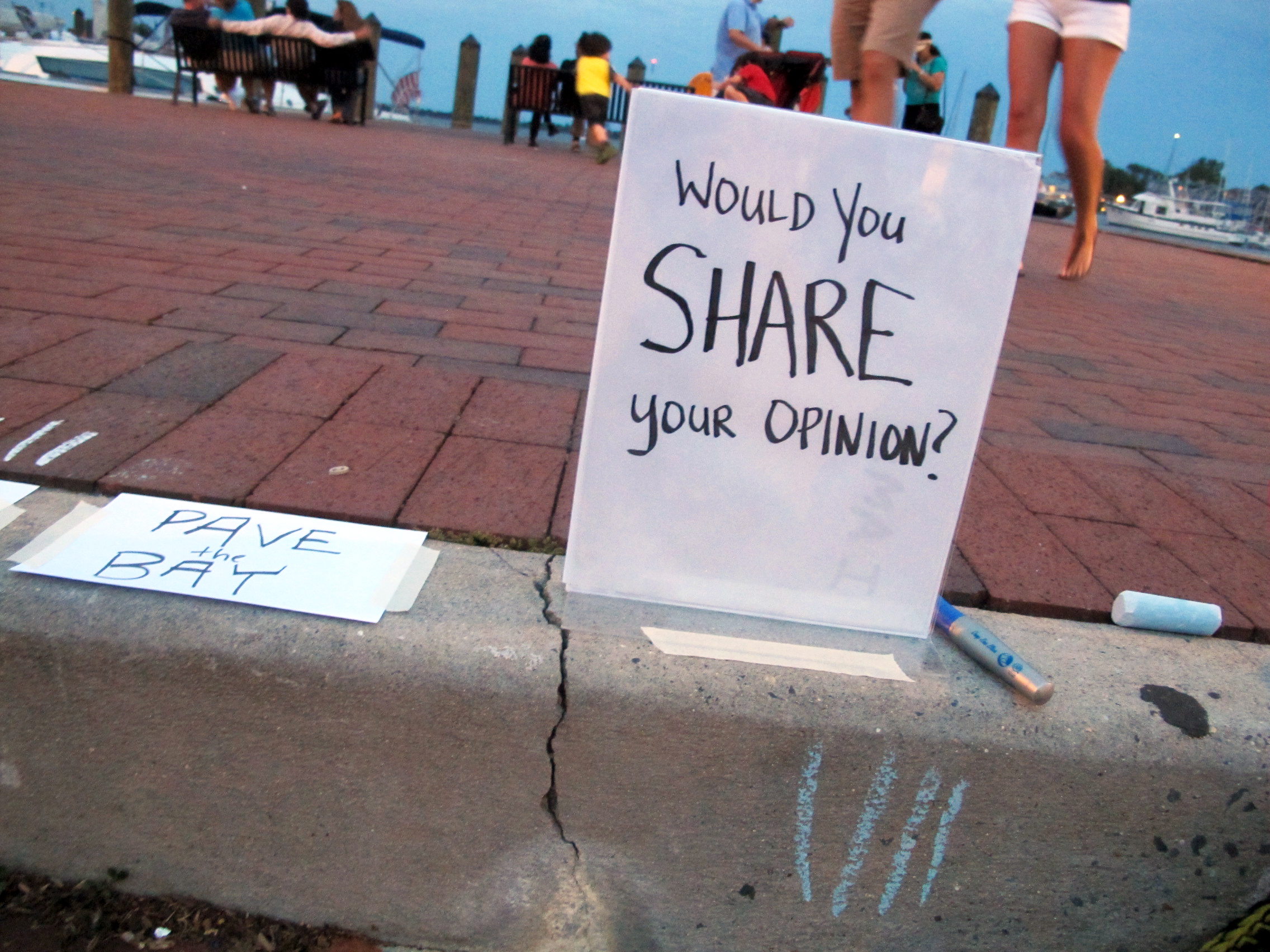
In response to being asked to create “opinion pieces” on environmental advocacy issues this month, I started thinking critically about what my opinions are on advocacy in general and what my approach would be in advocating an issue.  In my last opinion piece posted, I mentioned that I consider asking other’s opinions and listening to others perspectives as my own form of advocating.  I believe engaging people in dialogue is the first and most important step in bringing attention to any issue so I thought I would give it a go. I have been out of practice talking to the public and have not engaged with my actual environment (downtown Annapolis) since I arrived here 5 months ago, so I thought I would do both of these things for the creation of my second opinion piece. The photos below are documentation of the opinion experiment I conducted in the Annapolis Harbor.

My focus topic: Advocacy

My first question: “Can I ask your opinion?”

IMG_4392

My second question: “If you had to convince someone to believe something or do something that you really cared about, what would you do first? Would you listen to their opinion on the topic, or would you share your opinion about why you believe what you believe?”

IMG_4395IMG_4394

My third question: If you were going to advocate for or against one environmental issue what issue do you care about most and want to bring awareness to?

The answers:

Out of the 42 people who I talked with, 29 people said they would LISTEN first than before sharing an opinion when trying to advocate a position and 13 people said they would SHARE first then listen. When I asked “why listen first?” Some people expressed the desire to have the last word in a conversation saying that the last thing heard is what would stick the most. However, the majority of the people I talked to said that finding out where the other person was coming from first would give them a better understanding of how to communicate their own opinion to them.  One person made the comment that first there MUST be even a common fundamental understanding and knowledge around the issue at hand before trying to convince them on any topic one way or the other.  How might someone be convinced to buy organic vegetables if they have spent their entire lives growing up in the inner city and have never set foot on a farm? Or if they have never shopped in a place where they organic vegetables are even offered?

About half of the people who stopped to give their opinions stayed to have a longer conversation with me and shared their own perspectives and concerns on environmental issues.  Below are some ideas and questions that they brought up in conversation and wanted to bring awareness to.

IMG_4384IMG_4386

Here are a few more opinions….

“An affordable solution to environmental problems is mindful awareness”

“How can we reduce our waste/impact on the environment?”

“As the population grows, how can we find a way to decrease air pollution?”

“How do we get everyone on board in supporting environmental policies? A forceful change? Are affordable ways really affordable?”

“How much gas are we really using?”

“Is overpopulation an environmental issue?”

“Take the politics out of decision-making concerning the environment”

“Convert chicken waste into fuel/energy (md specific)”

So you might be asking what did I find in doing this short-lived experiment? What was the result or outcome?  Well,  I am not sure there is a specific outcome, as I was not searching for one.  It definitely was not a scientific experiment of any sort devised to solve any problems.  My goals were to engage people in dialogue about their advocacy methods and to find out specifically what people care about concerning the environment.  And I think I did both just by asking for their opinions.

What about you… what is your opinion?  Would you share your ideas and knowledge first when advocating a position or would you listen to another persons perspective first? And what environmental issues do you feel passionately about to advocate for or against.  Please share your feedback here or on the Living Chapters Facebook page

Photos below are brought to you by my good friend Howard who came out to document my experiment – THANK YOU to everyone who stopped to talk to me for participating.

8/28/13

Just finding this blog today? Read more about the Living Chapters project here.
IMHO

As a part of this month’s chapter challenges, I was asked to write opinion pieces on environmental advocacy issues. When I read this request, I have to admit I cringed.

I am not an op-ed writer, a scientist, or a researcher. I have never studied ecology issues, botany, climate change, sea –level rise, or any topics related to the environment. There are a lot  of people out there advocating about things that they just don’t know that much about and I vowed when starting this blog that I was not going to become one of them.  This blog was created for the purpose of sharing and questioning my personal beliefs rather than advocating or  convincing others to believe or adopt my beliefs.

With that said, it does not mean I do not have opinions to share and that I don’t care about environmental issues. I have very strong opinions about the environment, the work that I do and advocacy in general. I just prefer to share them in dialogues or in informal blog posts rather than in op-ed letters.  More importantly, I believe that anyone who advocates their opinions in public should have a solid knowledge of the topic they’re discussing or equal personal experience to base their ideas on. I admittedly do not possess the knowledge on either topic of “water quality in the Chesapeake Bay” or “natural gas extraction”. So, sorry to say, I will not be fulfilling this particular “Living Chapters” task in the way that it was suggested.

I will however share some of my opinions on advocacy with you. I believe in advocacy. I think it works when there is complete dedication, knowledge and passion behind it.  Advocating is very much like campaigning – using all your efforts and networks to help others understand why you believe what you believe. Often it comes off negative, saying that the person or groups that you are trying to reach, are in the wrong. Can you tell me how you feel when someone says that your heartfelt belief about something is wrong? In my opinion, it is not a good way to try to get anyone to come around to understanding your way of looking at things. (think about the political campaigns in the past 10 years, did any of those candidates reach you with any of their campaign strategies?)

In my opinion, the key to good advocacy work is engaging people with the topics in which you are advocating. Connect with your target audience and engage them with the advocacy issue(s) in a personal way. Find out what your audience cares about and why they care before telling them what they should believe.

Advocate by asking.

So if I had to advocate for anything? I would advocate listening.  I believe listening, followed with dialogue are the two crucial elements in moving toward collective change and problem solving of any kind.

Throughout my entire career, my work has often been confused with direct advocacy work because of the nature of the topics I have focused on and the populations that I have worked with. Topics have included: education and youth, social justice, homelessness, eminent domain, drug addiction, diversity, and the environment. The focus and goal of my work has been to encourage people within the communities I work in to use their own voices and engage with the issues that are important and relevant to them. The key has always been finding out what is important to them.

I find that I am actually pretty good at doing this. It may seem like a weakness to some people, but I believe that one of my biggest talents is my ability to “not advocate” or share my individual voice or strong opinion on issues. In other words… I am a good listener.

This trait alone has enabled me to be welcomed into a variety of organizations, groups, cultures and communities. Being open neutral and welcoming to any and all perspectives when encountering those with different ideas and opinions than my own, has provided me with numerous learning opportunities.

I cannot tell you how many times I have gained trust, built a relationship and gotten further into dialogue with someone by simply asking them to share their opinions before sharing my own. If you are genuinely interested in hearing and learning about someone else they will genuinely express themselves, open up to you and become more willing to listen and engage honestly.

My background in practicing this skill is what most likely landed me my current job at the Maryland Humanities Council. I was hired on to develop one, of their many, dialogue programs Practicing Democracy. This program uses the humanities (film, speakers, literature, and media) to bring Marylanders together for civic dialogue around polarizing community issues. The main challenge in developing this program is to create a place for ALL opinions and voices to be heard and shared in neutral and safe spaces. Another challenge is engaging those diverse voices in the dialogue who have not previously been involved. How do you get people with opposing opinions to really listen to one another?  And if they do come together can they find any common ground?

Well, the jury is still out on both of these questions as we are still experimenting in the ongoing evolution of the program. But in the three years doing these dialogue experiments, I have learned this: The desire for dialogue and thee need for a neutral convener is present. In each of our programs, we have been successful in bringing diverse voices to the table and we have been successful in highlighting and bringing new awareness to the chosen community dialogue topics. How did we do this? We asked for opinions and we asked for personal stories. To succeed in our goals of bringing diverse voices and perspectives together, we needed to leave advocating for or against issues out of the picture entirely. Instead we focused on community engagement, listening to what people cared about and inviting as many people as possible into the discussion no matter what their opinion was.

So yes, I have heard a lot of opinions in my work and have diligently kept my own mouth shut in order to do so. (Although sometimes not an easy task) Through this process I have learned to accept that everyone has their own truth. Some truths are backed by facts or numbers (science) some by personal life or work experience, some are based in faith and some are based in nothing I can understand or agree with. What I do understand though is that if you tell someone their truth is wrong and your truth is right before listening to them, a dialogue is not possible. Without dialogue a compromise is not possible, and without compromise collective change is less likely. And as far as the advocating for the environment – I believe we can all make individual choices and changes. This will help on a small-scale and at a slow pace. But if we want to see monumental progress we need to figure out how to work together and change collectively. And in my humble opinion, if we are going to start working together we have to start listening to one another first.

8/26/13

Just finding this blog today? Read more about the Living Chapters project here.

August: Wild Card

IMG_3093IMG_3104

For those of you who aren’t familiar with the Roles and the Rules for this project, the Wild Card adds one new element to the finished written chapter by playing their one and only card for the month. This “card” is really a suggestion or a new task that will shift or re-energize the chapter.  It may add an element of risk or an element of reflection and reverence. The wild card action must be played at the mid way mark of the month and will be taken on by the protagonist.  This new element may elevate an activity already written or diversify the challenge by changing the frequency or specifying a detail.  The Wild Card cannot eliminate pieces of the written chapter or negate any part of the written chapter. The Wild Card also should also take into consideration the chapter theme and the writers’ already composed directives when making their suggestion.

____________________________________________________________________

Man, the first thing I’m thinking as I read through all of the chapters is, what a cerebral ensemble  Beth has inserted me into…grand ideas!  Awesome start!! Then I thought well … It’s Beth!  …If  I’m digging the content…Does that make me cerebral too…oh snap!! Anyway, I don’t think it does… But gee wiz…it was difficult to think of a challenge that would be on par with the “Superfriends”.  I like Andy’s chapter… Especially Part II…”The Cap and Trade game” I’d like to add a category please  …..MONEY!

Now we all know that Beth is incredibly frugal.. So I’m not sure
how much this category will yield.  But since Living Chapters has evoked a new level of transparency in Beth.. I’m challenging her.. to be more thoughtful and apply a bit more investigation into the who,what and where surrounding her expenditures… If possible!!

+5 points every time you make a purchase that adversely impacts the environment

-3 points if you make an expenditure that has a positive impact on the environment

… And yes, you can be deliberate.  Heal the world man, heal the world!

That’s it in a nut shell!  Start spending your millions wisely Barbush!

___________________________________________________________________

CAP and TRADE UPDATE!

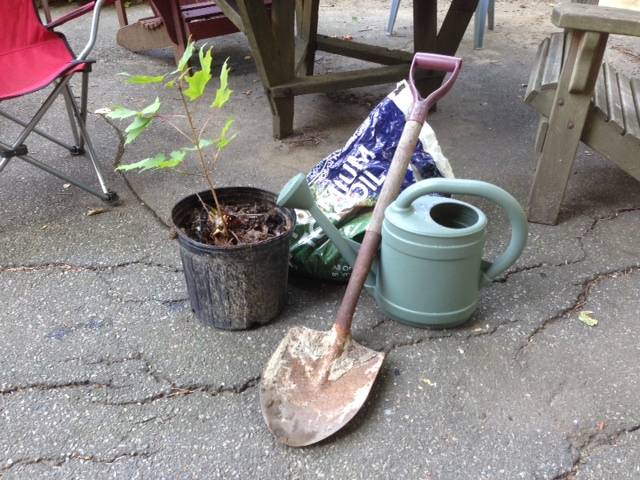
By the end of the first week playing the Cap and Trade game, Writer Andy Cook came in over the CAP and our protagonist came in under.  Beth traded some of her points with Andy in exchange for Andy planting a tree and reading up on some environmental issues. Here is the evidence of Andy’s “Trade Tasks” being accomplished:

AC instrumentsAC - watering AC planting AC - book

8/19/13

Just finding this blog today? Read more about the Living Chapters project here.

you left the water running…

photophoto-2

I loved reading Andy’s feedback on his own “Cap and Trade” adventures – we have had some serious and long conversations about this game thus far but I had no idea he was showering with a bucket!! Good on ya Andy! The only time I did that I was in a small village in Tanzania where there was no running water in any homes for miles. Everyone in the village shared one water tank/cistern. You had to use a bucket to bathe, do laundry and dishes. It took some getting use to but I got pretty good at it by the end of my time there. When I knew I was taking from the same water supply that everyone else was taking from, it really made me think about how much water I really needed compared to how much I actually normally use in my American home.

With this in mind, I also have tried to really become aware of my water current usage. I have not been quite as resourceful as Andy (carrying a bucket down the dock with me to the shower did not enter my mind), but I have been experimenting with a few other techniques in saving water outside of adopting the “if its yellow let it mellow” motto. I have been trying to collect rainwater when I can with my own bucket on the deck of the boat. When I am successful at collecting it – I use it for doing dishes. I have also been reusing the water used to hard boil my eggs in the morning or make pasta with for washing my dishes.

Like Andy, I realized that showering was a huge waste of water, so I started to zero in on this one aspect to see if I could change my habits. I have not been collecting my excess shower water but I have been making more of an effort to conserve the water that I currently am using in the shower. As I mentioned before, I live in a marina that has shared bathroom facilities. One of the things I really like about this set up is that the bathrooms are equipped with both energy and water conserving mechanisms. The lights are on a timer dial and the shower has an on/off valve to set the water pressure.

To start off attempting to cut my water use, I started showering every other day instead of daily and sometimes (gasp!) I go 2 days without showering. I also have tried shortening the length of my shower, using the timer that controls the lights in the bathroom. I set the timer for 10 minutes and if I am in the shower for over that 10 minutes the lights will go out leaving me in complete darkness. (there are no windows in the bathroom) This is a great incentive to shower efficiently! Each day I have been trying to beat my record for the shortest shower. My best as of now is 5 minutes. I also realized that when showering there is no reason the water needs to be on the entire time. Like Andy noted, so much water runs wastefully down the drain. I think the best way to save it is to lower the water pressure or turn it off entirely. I started just turning the water off or down to a drip when lathering up or washing my hair. And then turn it back on when I need to rinse.

Out of everything that I am doing to avoid points or subtract them, I think this particular effort is the one practice that has easily become a habit and will most likely stick. I never thought I would be sharing my personal showering habits with an online public (super weird!) but I think it’s actually an effort that anyone could adopt easily that could potentially save a lot on our water usage and bills. My marinas shower has a nozzle similar to this one. It is under $10. Order one now! There is NO reason not to try it out!  Please share some more ideas for water conservation if you have them.  Every drop in the bucket counts.

8/16/13

This has been my theme song for the past few weeks… and yes you might find me singing this one in the shower.

Just finding this blog today? Read more about the Living Chapters project here.

August Writer Response: Andy Cook

IMG_3685

Hello again LC readers, and welcome to my writer’s comment period.  After twelve days of playing Cap and Trade with Beth, I’ve spent quite a bit of time thinking not only about my personal consumption habits, but about consumption trends in the world in general.  I’ve no doubt this has also happened to Beth, perhaps causing some of her frustration with our fun game.  But after a few clarifying conversations, I think we’ve got the hang of it. In the next dozen or so paragraphs, I’ll subject you to some of my thought topics and some of the tactics I’ve adopted to mitigate my own wasteful behaviors.

But first, an invitation:

Join the Cap and Trade Game!  Like most games, learning the rules is a bit of a pain at first, but once you get the hang of it, it ain’t no thang.  Plus, if you’re good at it, at the end of each week you get to make other players do eco-friendly things.  This week, Beth got to make me read an environmental book and plant a tree (photos forthcoming)!  Regardless of how well you do, playing along is bound to make you examine your life and existence on this planet.  Who doesn’t want to do that? Find the game here.

My Experience Playing Cap And Trade

I began the first week of Cap and Trade on work-cation in New Orleans, which made playing the game pretty tough.  For one, the heat index in the city was over 100 degrees every day I was there, meaning I wasn’t about to sleep without air conditioning.  This wouldn’t have been a problem back in Boston (where I don’t even have air conditioning), and immediately got me thinking about the relationship of energy consumption to where we choose to live.  I’ve been known to scoff at the types who live in places where the weather is always beautiful (I’m looking at you, Californians), but I can’t deny the fact that such a choice means using far less heating and air conditioning (if not more driving).  When I think about climate change, and our dwindling non-renewable energy resources, I wonder:  will humans ever become a migratory species again? I pondered this while biking all over the city of New Orleans, which thankfully balanced out my air conditioning points quite nicely.  It didn’t, however, mitigate the points I got for flying in a plane, which is probably why Beth beat me this week!

After twelve days of playing this game, I can already say that some things have changed for me.

1 (WATER):  I now shower with a bucket.  Forcing myself to track my water usage and seek out opportunities for re-use has made me painfully aware of how much water I typically let fall down the drain.  It shouldn’t be surprising; we citizens of the developed world with plumbing and hot water heaters take the stuff for granted.  But the fact is, we can only do that because massive dams have been built, towns flooded, hundreds of miles of pipes buried beneath the earth, testing and treatment stations created, hundreds of experts trained and employed to treat and monitor, and millions of dollars spent annually to keep the whole system running.  And that’s just to get the water to our houses.

What do we do with it once it’s there?  We shit in it.  We leave it running while it heats up.  We let it rain gloriously over our bodies for minutes after we’re already clean, simply because we dread going to work.  And then that water flows through sewers to treatment plants (if it’s lucky) where it gets cleaned up and spat out into the ocean, where it becomes saltwater, unusable to us.  The least we can do as grateful citizens is try to make the most of it while we have it.   My shower bucket catches much of the water running off my body.  I then (don’t get grossed out) use it to shave.  Then I use it again to water my garden.  It’s a small gesture, I know (a drop in the bucket, you might say).  But it’s gotta start somewhere.  And speaking of small gestures…
2 (AIR): I turn my phone off frequently.  And it’s so satisfying.  You may have read the article on energy use of phones and computers I posted to the Living Chapters facebook page (or maybe you didn’t, so here).  As the article explains, charging a cell phone only requires a tiny amount of energy, but when you multiply that by everyone using cell phones in the world, it really adds up.  The bright side is, using a phone requires less energy than a laptop, and far less than a desktop, so I’m happy to shift my web browsing to that device.  But then I start to wonder: how much energy does the internet use?  I mean, the whole internet: all the servers, towers, satellites, and devices that connect to it?  I imagine the answer is hard to fathom, and likely not sustainable in the long term.

3 (FOOD): I eat less meat.  Particularly when I’m out at a restaurant and don’t know the provenance of the meat on the menu (did the chicken have a name?) This is something I’m constantly saying I’ll pay more attention to, but frequently don’t.  If a friend invites me to a new, awesome BBQ joint in the neighborhood, I’m there.  But with the incentive of competing for points with my good friend Beth, I’ve been opting for the salads and pasta primaveras.  And why shouldn’t I?  Conventionally raised meat is, quite frankly, a terrible thing.  Raising animals on factory farms uses a massive amount of water, supports a highly problematic corn subsidy system (because that’s what they’re fed), and dumps unhealthy amounts of antibiotics and feces into our watersheds.  If you’re interested in learning more about these issues, please check out the Food Systems And The Environment website I helped author last year in a class at MIT.
4 (WASTE): I’m composting again.  I was lucky enough to grow up with a hippy father who had me recycling and composting clear through high school (if you’re reading this, Dad, thanks!).  But as an adult, I haven’t composted unless I had a garden, which has only happened for two years so far.  I have a garden again at my home in Somerville, but since I’ve known I’d be moving in September, I haven’t bothered with the compost part.  WIth the incentive of the game, however, I’ve been saving my food scraps and donating them to my neighborhood community garden.  It’s easy, it’s satisfying, and it does a tiny bit to help fight back against the erosion of soil.

Ok. At this point, it’s taken me over three hours to write this response, and I can’t help but think about the points I’m racking up by having my computer on.  So if you’re still reading, thank you.  Please turn off your computer now, and go take a walk.                                                                                                                                                         Just finding this blog today? Read the prologue for more details on what Living Chapters is all about.

from where we are

bbatmarina

Before I begin to respond to the epic eco adventure planned for this chapter. I would like to take a small step back and reflect on the overall theme of the month that inspired Andy’s sustainability challenge. “The environment”

The term itself may mean different things to different people, but when I chose this theme as one of six for the Living Chapters year, I secretly hoped that I would be challenged in two areas: 1. How I engage with my physical environment (natural or man-made) and 2. How I consume the resources that our environment provides us.

We all experience our physical environments very differently therefore we also engage and consume in different ways. Coming from different backgrounds, and living in different places we all begin at varied starting points.

Untitled-4Untitled-8

So before diving head first into the compost bin, I’d like to take this first week to focus on becoming more aware of my immediate environment and my direct consumption patterns. Understanding where we are coming from and what we consume seems like it should be the first step in this “Eco-Awareness Game”.

So here is a quick snapshot of my own starting point:

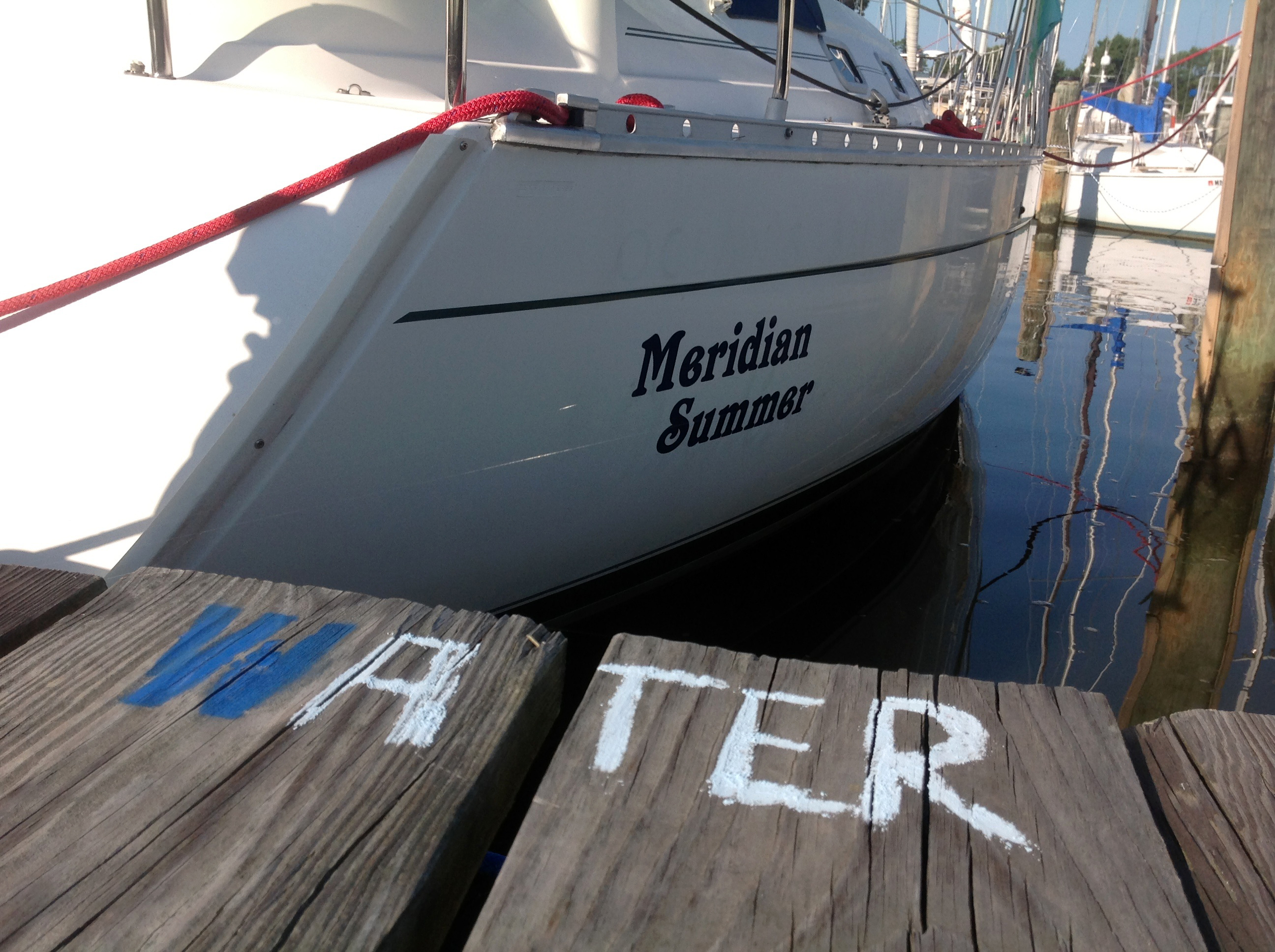
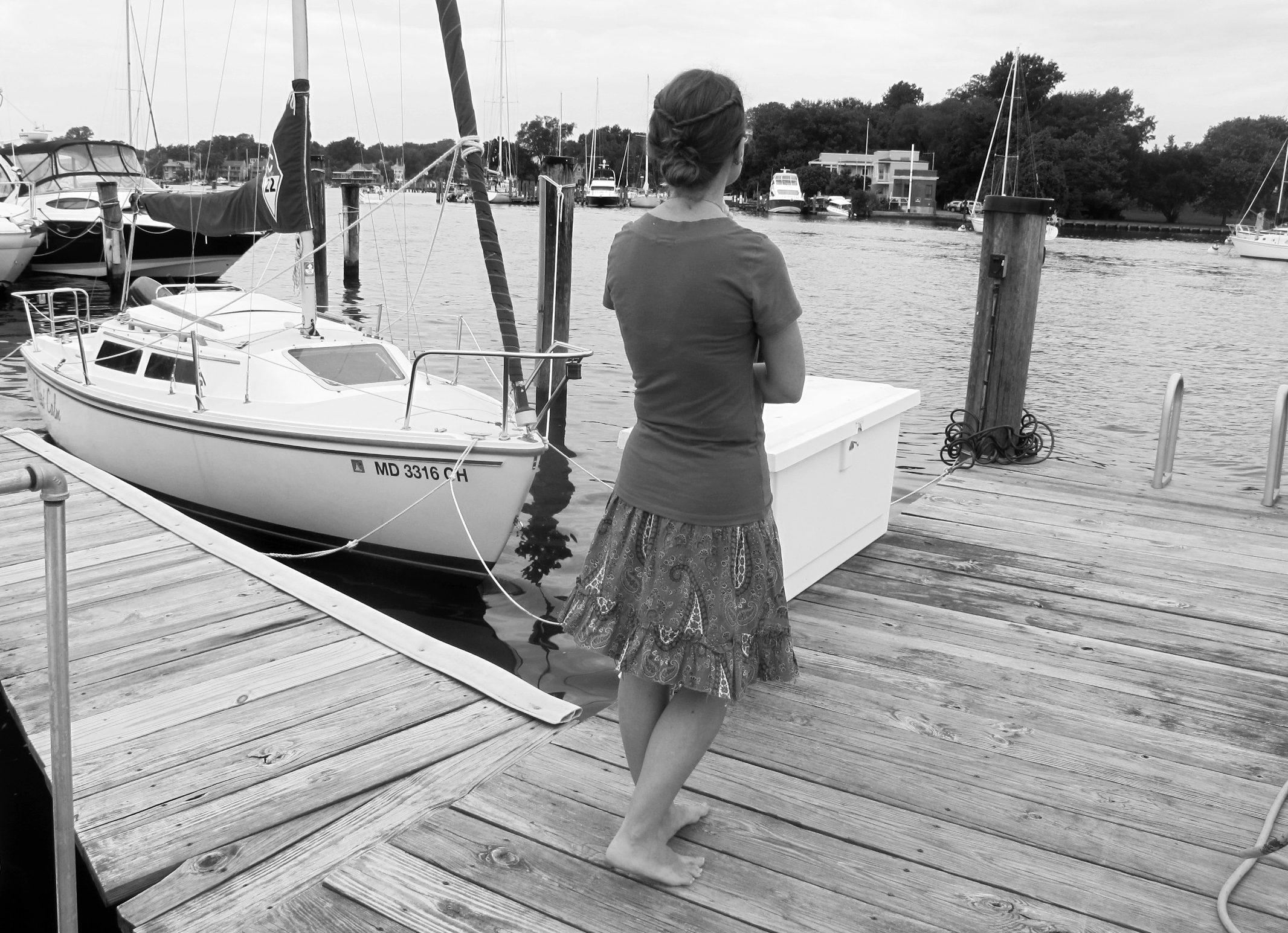
My home/residence: I currently live in Annapolis, MD. For the past 5 months, I’ve lived aboard “Chasing Gwian” a 30-foot sailboat. On that boat my electric bill never went over $28 a month. I also did not have running water to use or waste. In some aspects, I was living relatively simply and efficiently. At the beginning of this month, I moved onto “Meridan Summer”, a 31-foot sailboat with running water, a somewhat working galley (kitchen) and much more space to heat or cool. Moving up in comfort definitely means moving up in energy usage.

Energy Consumption: My primary source of travel right now is by car. For my job, I luckily can do most of my work from a laptop computer from any place. However, I am asked to commute to a Baltimore City office once or twice a week (30 miles one way) and the majority of my work this month will be at on-site events and activities in Southern Maryland communities (50- 100 miles from Annapolis). I also commute to Mechanicsburg, PA (120 miles one way) to see and help with family at least once or twice a month.  Since I left my last long-term leased apartment in Baltimore (over 2 years ago now), let’s just say I have been on the road. Even though I have a very gas efficient Toyota compact car, my use of fuel is astronomical! I may have spent more money in gas than I have in rent in the past two years!

Water consumption: I use toilet and shower facilities in a shared marina. Before moving into the marina, I had given very little thought to my water consumption.  I love long showers and hot baths! Since making the choice to live aboard  I have become more aware of both my water and electricity usage.  The change of lifestyle directly changed my habits whether I wanted to or not.

Food consumption:  I have no set patterns of where I purchase my food and I often eat out as I have not lived with a proper kitchen for more than a year now. Currently I do have a small garden bearing only some herbs, bolting greens and one thriving pepper plant (not enough food to sustain myself on) I enjoy going to farmers markets but often feel like I can’t afford to shop at them but have occasionally treated myself to the better food and more eco-friendly choices.  The bottom line is this: choosing the right food has always been a mystery for me… organic, local, free range, sustainable… can someone help me out?

At first glance this game looks like its going to be ridiculously tedious and hard. But I KNOW this will be rewarding if I can come up with some fun and creative solutions.

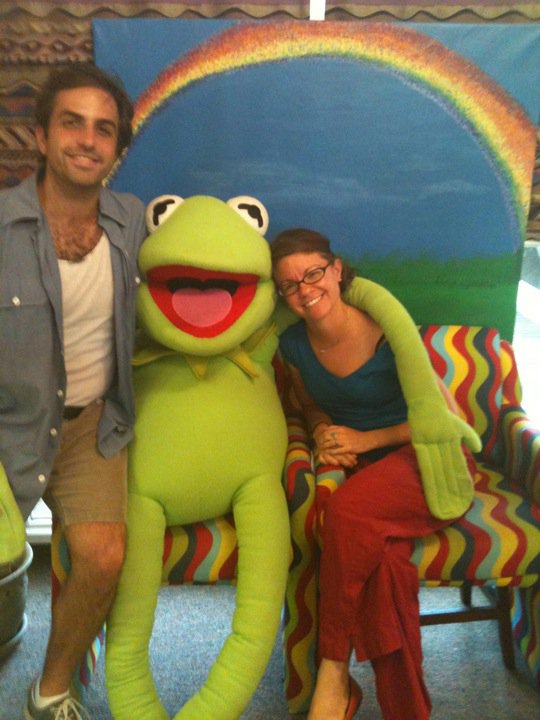
So please, if you will – join Andy and I in this game – go here and sign up to play. Or illuminate me with some creative and fun solutions to all these enviro-friendly challenges. Post to the blog or on the Living Chapters Facebook page – Cause like Kermit and Andy have said “It’s not easy being green”. We need your help!

Last month I learned that simple logic tells us less is more…I am going to try to stick to that mantra as I move forward.

8/3/13

Just finding this blog today? Read the prologue for more details on what Living Chapters is all about.

To get a taste of what it would be like to live on a boat yourself check out Sleeponaboat.com Greg, who runs this website, rents me the boat I am on and would like to connect both boat owners and individuals looking for a weekend stay or live aboard experience. I can only endorse this idea. I LOVE IT!

Chapter Three

IMG_3093 IMG_3096

It’s Not Easy Being Green

Terms like ‘green’, ‘sustainable’, and ‘eco-friendly’ have become increasingly common in our day-to-day lives.  We see them on packaging, menus, in TV ads, and in the speeches of our more progressive politicians.  It may at times be dismissed as trendy, but overall this is a good thing.  It means that as a society, the environment is on our minds.  But as the terms become more commonly tossed about, they run the risk of becoming diluted palliatives, geared more towards making us feel better about ourselves than inspiring real change.  Your dishwasher detergent may be phosphate-free, but your dishwasher still wastes a lot of water.

The fact is, leading a sustainable life can’t be simply a matter of informed purchasing.  After all, the term sustainable really means never-ending, which in this context means a complete independence from non-renewable resources.  Striving towards such a goal requires transformative changes in how we live our lives.  In this month of Living Chapters, I encourage Beth to approach this goal through introspection and advocacy.

PART ONE

Take A Position, Make It Known

I’ll start with advocacy since it’s shorter.  Beth has spent the last few years doing some impressive work around environmental issues in Western Maryland and on the Eastern Shore.  In Western Maryland, she organized community events to discuss natural gas extraction, and on the Eastern Shore, created a series of videos and community events highlighting different perspectives on the health of the Chesapeake Bay.  Both projects inspired much-needed dialogues in their communities, but lacked one thing: Beth’s own voice.
Now that she has spent time in these places learning about these issues, Beth has become if not an expert, at least a well-informed citizen when it comes to natural gas extraction (fracking) in the Appalachians and water quality in the Chesapeake.  By now, she must have opinions about what should be done in these communities to move forward.

During the month of August, Beth will create two ‘opinion pieces’, one on each topic.  The pieces can take the form of her choosing (written, audio, visual, etc) and must be shared in a public forum (newspaper, radio, gallery, etc). The pieces will be timely, responding to current events in the realms of fracking and Bay protection, but will be grounded in her experiences working with the stakeholders in both places.  The pieces will be clear, concise, well-researched, and heart-felt.  Should she choose a medium that requires jurying (for instance an op-ed section in a newspaper, or a curated show at a gallery), actual acceptance is of course out of her hands, but submission is required.  They also must be posted to the Living Chapters blog and Facebook account.

PART TWO

Cap and Trade For The Rest of Us

The EPA first tested the effectiveness of a ‘cap and trade’ system for the abatement of acid rain in the 1990’s, by restricting the amount of sulfur and nitrogen oxide emissions allowed by industrial polluters.  It proved effective enough that they’ve expanded the system to cover carbon emissions, a move that has been replicated internationally,  creating a global carbon market and reducing emissions in many countries.

How does it work? Very simply put, the government established an emissions limit that polluters must adhere to (the cap).  If a polluter manages to pollute less than the cap, the company earns credits, which they can sell to other polluters who cannot or do not meet the limits (the trade).  The system rewards innovations that reduce emissions, but still allows some flexibility for industries to comply.

During the month of August, Beth and I (and any of you who want to join in) will participate in our own cap and trade game.  This is where the introspective part comes in: this game will require close attention to the actions in our own daily lives.

Using the point system I’ve devised (below), we’ll tally our wasteful practices against our sustainable practices.  At the end of each week, we’ll have the opportunity to trade credits, hopefully balancing our collective point consumption under the cap.  At the end of the month, anyone whose points are still over the cap must donate the equivalent amount in dollars to the Chesapeake Bay Foundation.  There is no reward for having the fewest points; we’re all in this together!

A few notes about the point system:

1. The goal is to have as few points as possible. “+” points are bad.

2. I’m not a numbers person and this system has very little to do with any kind of accurate metric.  It’s just a game.  But if you happen to be someone that knows a lot about measuring embodied energy, please feel free to suggest amendments.

3. Additionally, if readers want to suggest other activities to be counted in the game, feel free.

4. Participants will have to track their point count daily in this Google spreadsheet.To join the game, email Beth at livingchapters@gmail.com.

5. I’ve divided the point system into four categories: Food, Air, Water, and Waste

FOOD

Eating a meal whose origins are unknown = +1 (vegetarian) +2 (with meat)

Eating a meal that is sourced locally (100 mile radius) = 0

Eating a meal at least part of which was grown or harvested by you or a friend = -1

Throwing away food (not composting it) = +2

Eating food that’s going to be wasted (either your friend’s left-overs, dumpster diving, etc.) = -2 

AIR (assuming non-renewable electricity and fuel sources)

Driving a car = +1 per 20 miles

Taking public transit = -1

Carpooling = 0

Riding a bike = -1 per 2 miles

Flying in a plane = +5

Charging your phone = +.5

Charging your laptop = +1 (if a desktop user, equivalent to 7 hours of use)

Lights and other household appliances = +1 per hour used

Hanging clothes in the sun to dry = – 1 point/load

Converting your BGE/energy supplier to a partially or entirely renewable source (solar/wind) = 1 time applicable – 20 points (some energy companies now offer the option to pay a bit more and have your power sourced from these options).  People can contact their supplier for more information.

WATER

Taking a shower = +1

Flushing a toilet = +.5

Running a dishwasher or washing machine = +2

Other faucet uses = +.5 per gallon

Re-using water (i.e. dish or bath water) = -1

Installing rain water catchment system at your home (or a friends) = -10 (one time only)

Using harvested rain water = -2

Bathing in a natural body of water = -1

WASTE

Producing 1 cubic foot of garbage = +1

Producing 1 cubic foot of recycling = 0

Producing 1 cubic foot of compost = -1

Creative re-use of anything (for instance, wine bottles, shopping bags) = -1 per use

The weekly cap for each participant is 56 points (8 per day) (note: this may be adjusted at the end of week 1 if that is way too hard or too easy).  Credit trading will happen on August 10, 17, 24, and 31 (August 10 will be a ten-day point tally with a total cap of 80).  Participation will require fastidious attention to all your activities (it may even require keeping notes).  Hopefully it will also require all participants to rethink their consumption habits and make changes for the better.  It may be difficult, but in the words of Jim Henson as sung through a frog puppet:  It’s not easy being green.

lc andy beth

Just finding this blog today? Read the prologue for more details on what Living Chapters is all about.

Gabe’s parting words

IMG_3685

For close to two decades, I have had the distinct pleasure of watching as Beth has woven the unique tapestry of her life. Eschewing expectations and avoiding predictable paths, she has touched the lives of thousands of people in a positive way, on her own terms. As I have watched her buzz around, sometimes in the same apartment, sometimes from afar, I have often felt that she has not given herself credit for the immense amount of “good work” that she has done.

Well, I no longer have to be the silent witness. Bethbarbush.com is now in the world, and it is a stunning portrait of Beth’s life’s work thus far. Not only is it aesthetically pleasing, it is a concise overview of all the amazing things that Beth has participated in and created in her professional life. As I said at the beginning of the month, Beth’s work is not well represented by a paper resume and I think her website ably proves my claim. Even without her heart-felt written summaries, the photo galleries alone on her ePortfolio tell stories upon stories… and all those faces reflect the larger theme that Beth’s work is all about people.

This past month was full of unexpected personal challenges for Beth, and I hope that in some small way, having a large, logical problem to solve that involved reflection on personal achievements provided some comfort during this time.

While I am always glad to see Beth, I was particularly glad that she was able to visit me during the course of this chapter. We were able to wander memory lane together, and to hash out the themes that have guided our lives to this point: one which happens to be another major transition period for us both. I was there to watch her pour through books of symbols and runes, and she was able to see my scrapbooks… all eight of them.

Unlike Beth, my scrapbooks are not complete. The pieces are in place, but my handwritten notes are still to be finished. Like Beth’s ePortfolio, like our lives, they are still a work in progress.

Thank you, Beth, for inviting me to be part of this project. I hope that as you show off your website in years to come, you are reminded of me and this project, and how friends can always be there to be that little extra motivation that you may need.